Fire Damage Restoration Chula Vista, From the First Night to a Repaired Home
Fire damage restoration Chula Vista property owners need starts in two very different halves of the city. In the east, in Eastlake and Otay Ranch, it is a garage or kitchen fire in a stucco master-planned home built in the last few decades. In the west, near Third Avenue, it is the same emergency in an older house with older wiring and additions from three different eras. Either way, the work that follows is the same sequence: secure the building once the fire department clears it, clean the smoke and soot out of every room it reached, and repair what burned. This page explains how that work runs in Chula Vista, and how this service connects you with independent local providers who do it.
- Emergency board-up and securing
- Smoke and soot cleaning
- Permitted rebuild referrals
- Independent local providers
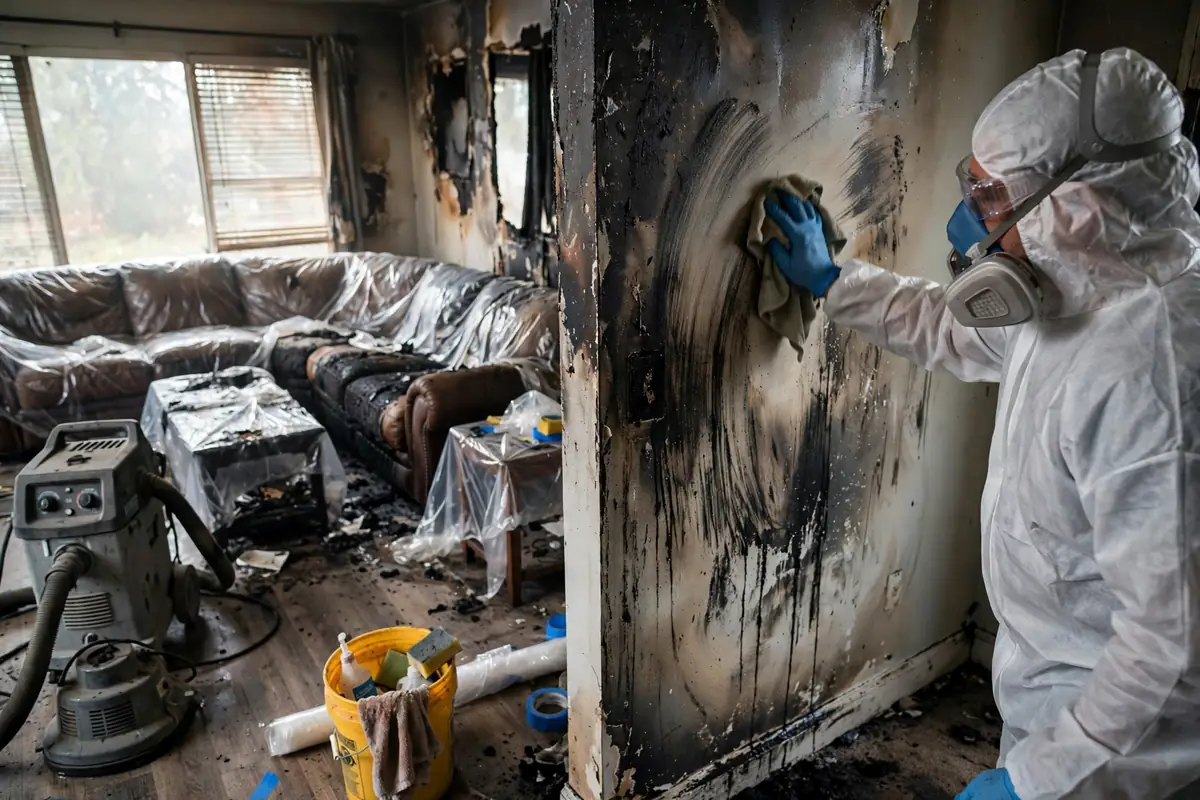
Fire damage restoration Chula Vista: secure, clean, then repair
Fire damage restoration in Chula Vista means securing the burned building once the fire department has cleared it, removing soot and smoke residue from every surface it reached, drying the water used to fight the fire, and then repairing the structure under a City of Chula Vista permit. Cleanup and rebuild are two stages with two different price tags, and a written scope should keep them separate.
Chula Vista is the second-largest city in San Diego County, home to about 280,000 people, and it is really two housing markets sharing one fire problem. East of the 805, whole neighborhoods went up as master-planned communities over the last thirty years, street after street of similar stucco homes. West of it sits the original townsite, where some houses are close to a century old. A provider who works Chula Vista properly plans differently for those two stocks, and the sections below walk through both.
Master-planned stucco in the east, older stock in the west
In Eastlake, Otay Ranch, Rancho del Rey and Terra Nova, the standard house is stucco over wood framing with a tile roof, an attached garage, and an open kitchen and family room plan. Those details shape the fire work. Tile roofs and stucco walls usually survive a contained interior fire well. The open floor plan does the opposite: smoke from one kitchen fire reaches every connected room, the hallways and the bedrooms beyond, so the cleaning scope is wide even when the burn is small. In the townhome and condo clusters of Otay Ranch and Eastlake, shared walls and shared attic space mean a fire in one unit is a smoke problem in the units on both sides, and the neighbors' homes belong in the inspection.
The west side pattern is different. The older homes near Third Avenue and the original townsite carry wiring, panels and heating equipment from earlier building eras, additions built at different times to different standards, and smaller, closed-off rooms. Fires there are more likely to involve the structure itself, and restoration runs into the realities of older materials: plaster instead of drywall, older insulation, and in the oldest stock, materials that need testing before demolition. The Bonita edge of the city, with its larger lots and semi-rural feel along the Sweetwater River valley, adds longer driveways, detached garages and outbuildings to the list of structures a fire can involve.
- Kitchen fires lead. Nationally, cooking is the leading cause of home structure fires (NFPA), and Chula Vista's family-sized kitchens, east and west, follow the same pattern: a stovetop fire, a small burn area, and smoke through the whole house.
- Garage fires spread smoke. Attached garages hold water heaters, fuel, tools and battery powered equipment. A garage fire often burns little living space but pushes soot through the shared wall, the attic and the duct runs.
- Shared walls in the east. Townhomes and condos in Otay Ranch and Eastlake share walls and attic space, so one unit's fire becomes several units' smoke cleanup, with several insurers involved.
- Older systems in the west. Near Third Avenue, older electrical panels, layered additions and plaster walls make fires more structural and demolition more careful than in the newer east side stock.
- Eastlake
- Otay Ranch
- Rancho del Rey
- Terra Nova
- Bonita
- 91910
- 91911
- 91913
- 91914
- 91915
What fire and smoke do while you wait
The fire itself is only the first damage. Soot is acidic, and it keeps working after the flames are out: it etches glass and polished stone, yellows paint and plastics, and corrodes metal fixtures and appliance finishes, faster in Chula Vista's mild coastal humidity than in a dry climate. Smoke residue rides the air into rooms the fire never touched, into closets, drawers and the ductwork, which is why a house can smell clean in the burned room and still carry the odor everywhere else. Then there is the water. Every gallon used to fight the fire is standing in the structure afterward, soaking subfloors, wall bases and insulation, in a city where most homes sit on slab foundations that hold that moisture against the flooring for days.
That is why the sequence matters more than the speed of any single step. Securing the building stops weather and theft from adding a second loss. Removing the suppression water stops a fire job from becoming a mold job. Cleaning soot early, with the dry, wet and chemical methods set out in the ANSI/IICRC S700 standard for fire and smoke restoration, is what keeps surface damage from becoming permanent. Odor work comes after the soot is gone, not before, because deodorizing over residue only seals the smell in.
Clearance and safety check
Nobody enters until the Chula Vista Fire Department has cleared the building. The provider then checks structure, wiring and gas before any work starts inside.
Board up and secure
Broken windows, damaged doors and roof openings are boarded or tarped so weather, animals and theft do not add to the loss overnight.
Remove the firefighting water
Standing water from suppression is extracted and the structure is dried, including slab edges, wall bases and insulation that took on water.
Clean soot and smoke
Surfaces are cleaned room by room using the method each material needs, and HVAC ducts are assessed so the system does not spread residue on restart.
Odor removal and contents
With soot gone, deodorizing treats what remains in materials. Salvageable belongings are cleaned on site or packed out, inventoried and stored.
Repair under permit
Structural, electrical and plumbing repairs are permitted through the City of Chula Vista and done by a CSLB licensed contractor, as the next section explains.
Permits, licenses and the insurance file in Chula Vista
Cleanup and rebuild sit under different rules in California, and Chula Vista homeowners feel the split on almost every job. The cleanup stage, securing the building, removing debris, cleaning soot and drying the structure, is mitigation work that follows the ANSI/IICRC S700 standard. The repair stage is construction. California requires a license from the Contractors State License Board for construction work of $1,000 or more, and structural, electrical and plumbing repairs after a fire need building permits, which in Chula Vista are handled through the city's development services department. A provider who is vague about who holds the license or who pulls the permit is telling you something important before the rebuild starts.
In the master-planned east, there is one more layer: many Eastlake and Otay Ranch homes sit in homeowners associations whose approval can be needed for exterior changes, roofing and anything visible from the street. Getting the association's requirements into the plan early keeps a finished interior from waiting on an exterior approval. None of this paperwork slows down the emergency stages. Board-up, cleanup and drying come first, and the permits and approvals run alongside the insurance claim while they proceed.
- City permits. Structural, electrical and plumbing repairs after a fire are permitted work in Chula Vista; emergency securing and cleanup are not held up by that process.
- CSLB license for rebuild. Construction of $1,000 or more in California needs a licensed contractor, and fire rebuilds are well past that line. Ask for the license number and check it.
- S700 for cleanup. Fire and smoke cleanup follows the ANSI/IICRC S700 standard. A provider should be able to name the standard their methods follow.
- Documentation wins claims. Dated photographs before cleanup, an itemized scope and a contents inventory are what insurers pay on. Providers matched here document as they go.
For the money side, the published San Diego ranges and the method for reading any quote are on our fire damage restoration cost guide. Smoke and soot work on its own is covered on the smoke damage restoration page, securing a burned building on the board-up and tarping page, and the full county picture starts from the fire damage restoration San Diego homepage and the service areas page.
Common questions about fire damage in Chula Vista
How much does fire damage restoration cost in Chula Vista?
Published San Diego figures put most fire and smoke restoration between $3,000 and $50,000, and national cost guides price the work at roughly $4 to $7 per affected square foot. A contained Eastlake kitchen fire sits at the low end. A fire that takes several rooms and needs permitted rebuild work sits far higher. The cost guide on this site shows the published sources behind those ranges. Your own figure comes from the provider's written scope after inspection, not from any website range.
Do I need a permit to repair fire damage in Chula Vista?
Structural, electrical and plumbing repairs after a fire need building permits, handled through the City of Chula Vista's development services department. Emergency securing, board-up and cleanup come first and do not wait on paperwork. The rebuild stage is licensed work in California: construction of $1,000 or more needs a CSLB licensed contractor. Ask your provider who pulls the permit, and confirm their license number before rebuild work starts.
The fire was in my garage. Does the house still need smoke cleaning?
Usually it needs at least an inspection. Garage fires are a common pattern in Chula Vista's master-planned neighborhoods, where the garage is attached and shares a wall, an attic and often duct runs with the living space. Smoke travels through door gaps, attic access panels and HVAC ducts, and soot settles in rooms that never saw flame. A provider can wipe-test surfaces and tell you honestly which rooms need cleaning and which do not.
Can I stay in my home during fire damage cleanup in Chula Vista?
It depends on the damage and on the fire department's clearance. A contained kitchen fire, with the rest of the house cleaned and the work area sealed off, sometimes allows it. A fire that damaged structure, wiring or the HVAC system usually does not, and soot and odor work is unpleasant to live around. Many homeowners policies include additional living expense coverage. Ask your insurer early, and have the provider's scope state plainly which parts of the home are out of use.
How fast can a provider reach Chula Vista?
This service takes requests around the clock and matches them to providers working the South Bay, including all five Chula Vista ZIP codes: 91910, 91911, 91913, 91914 and 91915. Arrival time depends on the hour and on how many emergencies are already running, and an honest provider will not promise an exact minute before seeing the job. What speeds everything up is a clear first message: the address, what burned, and whether the fire department has cleared the building.
Will insurance cover fire damage restoration in Chula Vista?
Most homeowners policies cover sudden fire and smoke damage, including cleanup, repairs and often temporary housing, minus your deductible. What decides the claim is documentation: the fire department's clearance, dated photographs taken before cleanup, an itemized scope and a contents list. Providers matched through this service document the job as they go. Keep every receipt, do not throw damaged items away until your insurer releases them, and open the claim early.
A fire in Chula Vista is not a wait-until-Monday problem.
Soot is etching surfaces and the suppression water is soaking the slab while the house sits. Get the building secured, get the cleaning started, and get the permit path named in writing. Reach out now and get connected with a local provider who does fire work across Chula Vista and the South Bay.
Get Help Now