Fire Damage Cleanup San Diego, From Debris Out to Safe and Dry
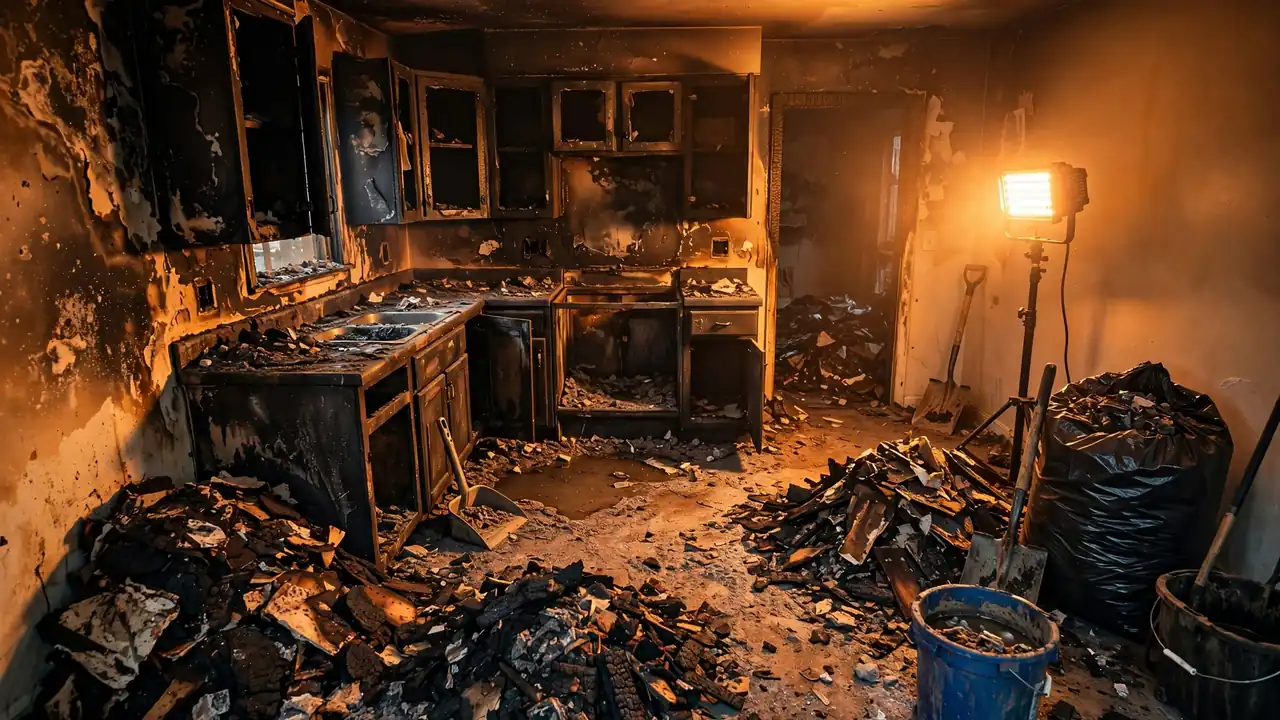
After the trucks leave, fire damage cleanup San Diego homeowners face is three jobs wearing one name: a building full of charred debris and ash, hundreds of gallons of firefighting water soaking the structure, and soot settling into every room. The order those jobs are done in matters as much as the effort. This page walks through that order, the safety rules that come first, and how this service connects you with independent local providers who do the work.
- Nothing entered before clearance
- Debris out, water out, then soot
- Hazard checks on older homes
- Independent local providers
Fire damage cleanup San Diego: the order of work
Fire damage cleanup in San Diego starts after the fire department releases the building: photograph everything, board up the openings, carry the debris and ash out, extract the firefighting water and dry the structure, then clean the soot. The order protects the insurance claim and the building at the same time.
Rushing the order is how cleanup jobs go wrong. Soot wiped with the wrong method spreads instead of lifting. Debris thrown away before it is photographed is a claim item nobody can pay for. Drywall closed over a wet structure is a second demolition waiting to happen. The steps below are the sequence San Diego fire cleanup work actually follows, and knowing them lets you judge any provider's plan before you sign it. This is the work emergency fire cleanup services in San Diego are called for in the first days after a fire, and it starts with safety, not shovels.
San Diego's fire history shapes the cleanup
San Diego knows two kinds of fire. The everyday kind is the structure fire: a kitchen, a garage, a heater, an electrical fault. Nationally, NFPA figures put cooking first among home fire causes and heating second, and San Diego's everyday losses follow the same pattern. Those fires are one home at a time, and the cleanup on this page is written for them.
The other kind is the one the county plans around. In October and November 2003, the Cedar Fire burned 273,246 acres, destroyed 2,820 structures and killed 15 people, burning into Scripps Ranch and Tierrasanta. In October 2007 the Witch Fire burned 197,990 acres and 1,650 structures, and the firestorm that month forced the evacuation of about 500,000 people. Both ran on Santa Ana winds through canyon and chaparral country, which is why canyon-rim neighborhoods carry the county's fire history in a way the coastal flats do not.
That history reaches the cleanup in practical ways. Homes in Rancho Bernardo, Poway and Lakeside that took wildfire smoke need ash and soot work even when nothing burned. Older homes across the city, in North Park, Mission Hills and the prewar streets near downtown, carry materials that change how debris can be handled. A provider assessing your home reads that history as part of the assessment.
- San Diego
- Chula Vista
- La Mesa
- El Cajon
- Santee
- Lemon Grove
- National City
- Imperial Beach
- Coronado
- Oceanside
- Escondido
- Carlsbad
- Vista
- San Marcos
- Encinitas
- Solana Beach
- Del Mar
- Poway
The full list of neighborhoods and ZIP codes is on our service areas page.
What a fire leaves behind
A burned home is not one mess but three, and each has its own method and its own safety rules. The debris is solid and visible. The water is liquid and sinking. The soot is nearly invisible and everywhere. Crews sequence the three so each one is handled while it is cheapest to handle: solids out first, water out before it soaks deeper, soot cleaned before it sets into surfaces.
Contents sit across all three jobs. Furniture and belongings are inventoried, then cleaned on site, packed out, or recorded as losses, and our contents pack-out page covers that stage in full. What matters at cleanup stage is that nothing leaves the house unrecorded, because the inventory is part of the claim.
- Charred debris and ash. Burned material, collapsed contents and ash are carried out and contained so residue does not spread through the street. Ash is fine and acidic; it is handled damp and bagged, never dry-swept into the air.
- Firefighting water. Hundreds of gallons soak down through floors and framing. It is extracted and the structure dried with metered readings, the same discipline as any water loss, because wet framing behind soot is still wet framing.
- Soot and smoke residue. Acidic soot coats rooms the fire never entered and keeps damaging surfaces while it sits. It is tested, then dry-cleaned or wet-cleaned by type, as our smoke damage restoration page explains.
- Hazards in older materials. Asbestos in materials fitted before 1981 and lead paint from before 1978 can both be disturbed by a fire and its cleanup. Suspect material is left alone until it is assessed, not torn out with the rest of the debris.
Clearance, record, secure, clear, dry, clean
Wait for clearance
Nobody enters until the fire department releases the building and the utilities are checked. Fire weakens floors, framing and roofs in ways that do not show from the doorway, and this step is not negotiable.
Document everything
Every room photographed and filmed before anything moves, including contents in place and the water and soot lines on the walls. This record carries the insurance claim from the first day to the last.
Secure the property
Burned windows and doors are boarded and a damaged roof is tarped, as our board-up and tarping page describes. This keeps weather and passersby out, and most insurers expect it as a condition of the claim.
Debris and ash out
Charred material and ruined contents are sorted, contained and hauled to facilities permitted to take fire debris. Hazardous items are kept separate. Porous material that soot and water soaked through comes out rather than being cleaned in place.
Water out, structure dry
Standing firefighting water is extracted, material that cannot dry is removed, and the structure dries under equipment with daily moisture readings. Nothing is rebuilt, and no wall is closed, until the readings say dry.
Soot cleaning and checks
With the building clear and dry, soot is cleaned room by room and the HVAC system is cleaned so it cannot hand the residue back. Damaged structure found along the way is recorded for the repair scope that follows.
Safety rules for the first day back in
- Do not enter before the fire department clears the building, and keep children and pets out until surfaces are cleaned.
- Boots, gloves and a proper mask on, every time. Ash and soot irritate lungs and skin, and debris hides nails and glass.
- Do not disturb suspect material in older homes: asbestos from before 1981 and lead paint from before 1978 need assessment first.
- Never run a furnace, water heater or air handler that took fire, smoke or water damage. Soot in the system spreads to every room.
- Leave appliances and wiring in burned rooms alone until they are checked. Heat damages insulation you cannot see.
- Wash hands and any skin that touched ash or debris before eating or drinking.
Fire is a covered peril, and the record decides the claim
What the claim covers
Fire sits at the center of the standard California homeowners policy, and a fire claim usually reaches the whole cleanup: debris removal, water extraction and drying, soot cleaning, contents, and the rebuild after. Additional living expenses often cover a hotel while the home is unfit to live in. The cleanup stages on this page are the work that stops the loss growing, and insurers expect them to start promptly.
Where cleanup claims go wrong
Debris hauled away before it was photographed. Contents thrown out before they were listed. A home left wet while the fire damage was debated, so a fire claim grows a mold problem in the walls. And cleanup billed as one lump sum with no lines, which no adjuster can check. Every one of those is an order-of-work mistake, and every one is avoidable.
General patterns, not advice about your own cover. For the cost side of a cleanup job, the published ranges and the quote-reading method are on our fire damage restoration cost guide, and the full service starts from the fire damage restoration San Diego homepage.
Common questions about fire damage cleanup
Can I start cleaning up before the fire department clears the building?
No. Until the fire department releases the building, stay out, however small the fire looked. Fire weakens framing, floors and roofs in ways that do not show from the doorway, and hot spots can flare again hours later. Utilities are often shut off at the meter and need checking before they run. Once clearance is given, the first jobs are photographs, the insurer call and boarding up open windows and doors, in that order. Cleanup starts after the record is made.
Is fire debris dangerous to handle myself?
Treat it as dirty until proven otherwise. Ash and soot are fine, acidic residues that irritate lungs and skin, and fire debris can hide nails, glass and sharp metal. The bigger worry in older San Diego homes is what the fire disturbed: asbestos in materials fitted before 1981 and lead paint from before 1978 both need care and, for asbestos, registered specialists under California rules. Boots, gloves and a proper mask are the minimum, and children and pets should stay out of the work area entirely.
What happens to the water used to fight the fire?
It has to come out, the same as any water loss. A fire hose puts hundreds of gallons into a home, and it soaks framing, insulation and subfloor on its way down through the building. Providers extract the standing water, remove material that cannot dry, and run drying equipment with moisture readings until the structure reaches normal levels. Left sitting, firefighting water is what turns a fire loss into a mold problem a few weeks later, so it is handled in the first days, not after the soot.
Where does the fire debris go?
In plain terms, it is sorted, contained and hauled away, not swept into the household trash. Charred material, ash and ruined contents are bagged or loaded so soot and ash do not spread through the street, and taken to facilities permitted to take construction and fire debris. Anything hazardous, paint, chemicals, batteries, suspect asbestos material, is kept separate and handled under the rules for that material. Every load that leaves is part of the job record, because disposal is also part of the claim file.
How long does fire damage cleanup take?
The cleanup stage is measured in days for most homes: board-up and debris removal first, then water extraction and drying, then soot cleaning room by room. A small kitchen fire with smoke through the house might see cleanup done inside a week. A multi-room fire with heavy debris and structural hazards runs longer, and nothing is rebuilt until drying readings say the structure is dry. Rebuild is a separate, longer clock, quoted and scheduled apart from cleanup. Ask for both timelines in writing.
Does insurance cover the cleanup after a fire?
Fire is a covered peril on standard California homeowners policies, and cleanup is part of the loss the claim exists to repair: debris removal, water extraction, drying and soot cleaning are the work that stops the damage growing. What decides what is paid is the documentation: photographs before anything is thrown away, an inventory of damaged contents, and the provider's itemized scope. Keep receipts for emergency work and any hotel nights. Policies differ, so confirm the details of yours with your insurer early.
The fire is out. The clock has not stopped.
Soot keeps etching, water keeps soaking, and an open house keeps inviting weather in. Get the record made, the openings boarded and the cleanup started in the right order. Reach out now and get connected with a local provider who does fire cleanup work across San Diego.
Get Help Now