Contents Pack-Out in San Diego: Cleaning and Saving What the Fire Did Not Take
A contents pack-out in San Diego starts in the hardest room of the house: the one where your belongings sit covered in soot while the building waits to be cleaned and rebuilt. Done properly, a pack-out is an inventory job before it is a moving job. Every item is photographed, listed and numbered, the cleanable is separated from the lost, and everything that leaves the house is tracked to storage and back again. This page explains how that process runs, what can usually be saved, and how this free referral service connects you with independent local providers who document the work the way a claim requires.
- Photo inventory before anything moves
- Climate-controlled storage
- Chain of custody, box by box
- Independent local providers
Why contents work is a claim job, not a moving job
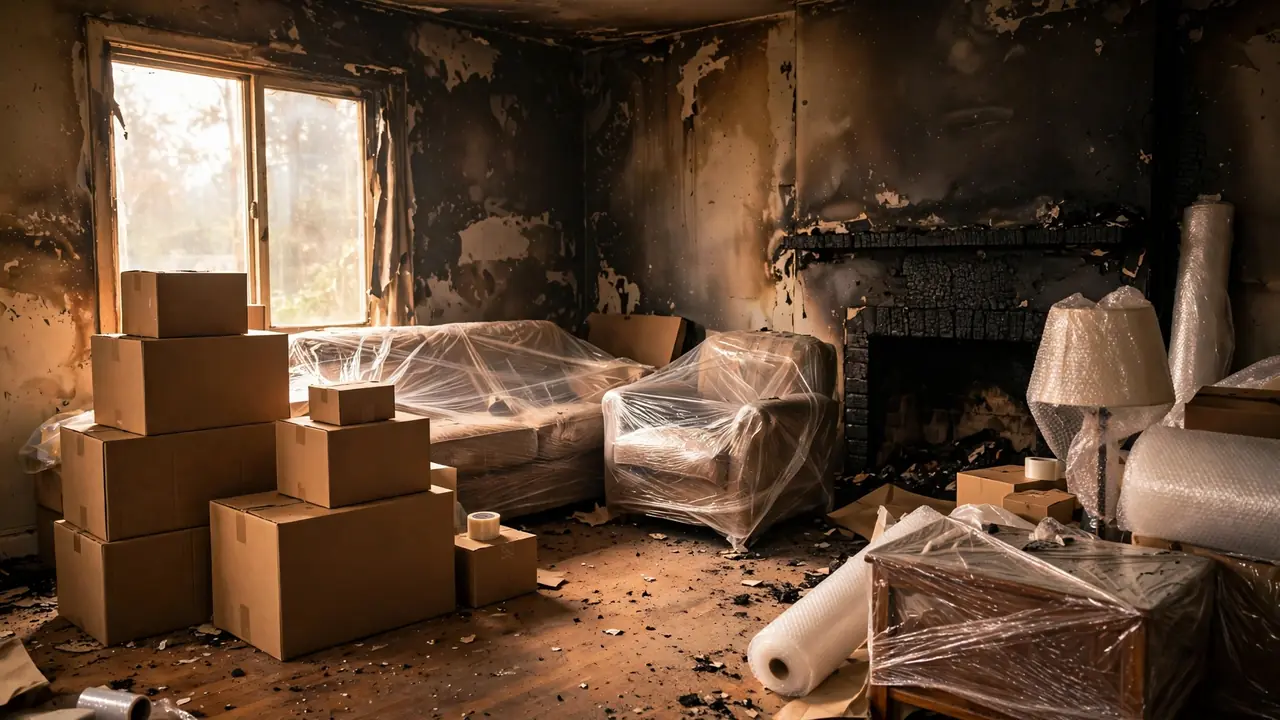
A pack-out protects two things at once: your belongings, which soot keeps damaging until they are cleaned, and your claim, which is paid from the inventory record. Items are photographed and listed in place, sorted into what can be cleaned, what needs specialist work and what is a documented loss, then packed, stored and returned against that same list.
The distinction matters because a fire loss is settled item by item. An adjuster cannot pay for a sofa that was never photographed, and a family cannot check a returned truckload against a list that was never made. Soot adds the second clock: it is acidic, it etches and corrodes, and belongings that sit in a burned house for weeks come back worse than the fire left them. That is why contents work sits inside fire damage restoration in San Diego as its own specialty page, with its own rules, rather than as a line on a cleanup quote.
How a contents pack-out in San Diego runs, step by step
Inventory and photograph
Before anything is packed, the crew walks room by room with you where possible, photographing items in place and building the numbered inventory. Pre-existing damage and fire damage are noted separately, because the claim reads this list.
Sort and decide
Items are sorted into cleanable, specialist and non-salvageable. The provider documents condition, the adjuster works from that record, and you sign off on anything released as a loss. Nothing is discarded before it is photographed and listed.
Pack and move out
Cleanable contents are packed by room and category, each box numbered to the inventory, and moved to cleaning and storage. Fragile, electronic and document items are flagged for their specialist routes instead of the general run.
Clean, store and return
Contents are cleaned and deodorized, held in climate-controlled storage while the building is restored, then delivered back and checked off against the same inventory at move-back. The list that went out is the list that comes home.
What usually comes back
- Hard furniture and metal or glass goods. Non-porous surfaces clean fully, and solid wood usually cleans and deodorizes well when the finish is intact.
- Clothing and textiles. Specialty laundry handles soot and odor in most garments, bedding and curtains, including many items a home wash would set the smell into.
- Electronics, with speed. Specialist cleaning can save a large share of devices when they are treated early and never powered on while full of soot.
- Documents and photographs. Drying, surface cleaning and digitizing recover more than most families expect, when the boxes are flagged as priority on day one.
What usually does not
Anything the flames actually burned, of course, plus the porous items soot and heat reached deeply: mattresses and upholstered pieces from the fire room, food and medicines, cosmetics, and particleboard furniture that heat or firefighting water has swollen. Those items are photographed, listed and valued for the claim rather than cleaned. Once the contents are out, the building itself gets the soot and odor work described on our smoke damage restoration and odor removal pages, in that order, because cleaning a house around its contents serves neither.
Three categories that need their own handling
Most boxes pack the same way. These three do not, and they are where a pack-out earns or loses its value.
Electronics and appliances
Soot corrodes circuit boards, contacts and cooling fans, and it keeps working after the fire. Devices are never tested by switching them on. They are documented, packed dry and sent to electronics cleaning early, while corrosion is still reversible, and each one is assessed and reported individually for the claim.
Documents, photos and records
Paper damaged by water from firefighting can mold within days, so wet documents are stabilized first and cleaned after. Photographs, tax records, legal papers and family archives are flagged on the first walk-through, handled as priority items, and digitized where the originals stay fragile.
Furniture, clothing and soft goods
Upholstery and soft goods hold soot and odor deeper than any other category, and they split sharply: pieces from rooms the flames reached are usually documented losses, while pieces from smoke-only rooms often clean fully through specialty textile work. The room an item sat in decides most of its fate.
Chain of custody, in plain terms
Chain of custody is the paper trail that proves the item that comes back is the item that left. It runs photograph, inventory number, box number, storage record, return check-off, with your signature at the release points. It sounds formal because it is doing two jobs at once: it is the claim's evidence for what was damaged, cleaned and stored, and it is your protection if anything is questioned later. Keep your copy of the inventory somewhere outside the house.
Storage and the move back
Cleaned contents wait in climate-controlled storage because San Diego heat in a plain warehouse or a garage can bake odor back into textiles and grow mold on anything that was not bone dry. Storage runs until the building is cleaned, rebuilt and ready, which on a larger loss can be weeks to months, and that timing is part of the claim file. At move-back, items are checked off the inventory room by room, the same standard our providers work to across the full service area.
Common questions about contents pack-out
What is a contents pack-out, and when is it needed?
A pack-out is the documented removal of your belongings from a fire-damaged home so the building can be cleaned and rebuilt, and so the belongings themselves can be cleaned and stored safely. It is needed whenever fire, soot or the coming rebuild puts contents at risk: a room that burned, a house full of soot, or a rebuild that cannot happen around furniture. Every item is photographed and listed before it moves, because that inventory is both your claim record and the checklist your belongings are returned against.
Who decides what gets cleaned and what gets replaced?
Three parties, in order. The provider documents the condition of each item and gives a professional view on whether cleaning can restore it. Your insurer's adjuster decides what the claim pays for, working from that documentation. And you decide on the items where money is not the point: family photographs, documents, keepsakes. Items nobody can agree to save are photographed, listed and released only with your sign-off. Nothing on a proper pack-out is thrown away quietly or decided by the crew alone.
Can electronics be saved after a fire?
Often, yes, if they are handled quickly and not switched on first. Soot is acidic and corrosive, and it keeps damaging circuit boards and contacts after the fire is out, so electronics go to specialist cleaning early in the job. Powering a soot-filled television or computer on to test it can finish what the fire started. Devices are assessed piece by piece: many come back fully working, some are documented as losses, and the inventory record is what the claim pays from either way.
What happens to documents and photographs after a fire?
Paper is time-sensitive. Wet documents are stabilized, sometimes by freezing, to stop mold and ink damage while they wait for drying and cleaning. Scorched and soot-covered papers and photographs can often be surface cleaned, deodorized and digitized, so you hold a copy even where the original stays fragile. The practical rule is to flag the boxes that hold documents, photographs and records on the first walk-through, before general packing starts, so they are handled as the priority items they are.
Where do my belongings go, and how do I know they come back?
Cleaned and waiting items are held in climate-controlled storage, the standard for fire work because heat and damp undo cleaning and grow mold on stored goods. Each box and item carries its inventory number from the pack-out list, and that chain of custody, photograph, list, box number, storage record, is what your return is checked against at move-back. Ask to see the inventory before the truck leaves. A provider who cannot show you the list has not made one.
Does insurance pay for pack-out and contents cleaning?
On a covered fire claim, contents work is a normal part of the loss: fire is a covered peril on standard California homeowners policies, and personal property cover is the part of the policy that responds to belongings. Packing, cleaning, storage and move-back are documented as claim costs, and damaged items are paid from the inventory record. What your own policy covers and at what limits is in your declarations page, so treat this as the general pattern and confirm the details with your adjuster.
Soot does not stop working while you wait.
Every day belongings sit in a burned house, corrosion and odor set deeper and the cleanable list gets shorter. Reach out now and get connected with a local provider who inventories, packs out and documents the work the way your claim needs it done.
Get Help Now